Guidelines for Verifying Real Estate Documents Without a Lawyer’s Assistance
Buying a property is a major milestone and often one of the most significant investments in a person’s life. However, amid the excitement of finalizing a dream home or a lucrative commercial property, many buyers overlo…
Buying a property is a major milestone and often one of the most significant investments in a person’s life. However, amid the excitement of finalizing a dream home or a lucrative commercial property, many buyers overlook a crucial step — verifying the real estate documents. While consulting a lawyer is always the safest route, you can still carry out basic document checks yourself with a little guidance.
At Kamal Associates, we understand that not everyone has immediate access to legal assistance. That's why we've created this practical, step-by-step guide to help you verify real estate documents without a lawyer.
Why Document Verification Is Essential
Before diving into the checklist, it's important to understand why document verification is necessary:
- To ensure the seller has legal ownership
- To avoid fraud or disputes
- To confirm that the property complies with government regulations
- To facilitate a smooth transaction and registration process
Whether you're buying a flat, a plot, or a commercial space, proper verification can save you from potential financial and legal trouble.
1. Verify the Title Deed
What it is: The title deed proves the seller’s legal ownership of the property.
How to verify:
- Ask for the original title deed.
- Ensure the title is clear and marketable, meaning the property is free of disputes or claims.
- Match the owner's name with their government-issued ID.
- Check for encumbrances, mortgages, or loans associated with the property. This can be done at the sub-registrar's office.
Pro Tip from Kamal Associates: Always insist on seeing the original documents, not just photocopies.
2. Check the Sale Deed
What it is: This is the core legal document that records the transfer of property from the seller to the buyer.
How to verify:
- Make sure it's registered at the local sub-registrar office.
- Verify the chain of previous ownership, if any.
- Cross-check the property’s dimensions, location, and boundaries mentioned in the deed.
3. Mutation Certificate
What it is: The mutation certificate shows that the property has been recorded in the buyer’s name for municipal purposes (like paying property tax).
How to verify:
- Visit the local municipal authority or their website.
- Ensure mutation has been completed in the current owner's name.
4. Encumbrance Certificate (EC)
What it is: An EC confirms that the property is free from monetary or legal liabilities.
How to verify:
- Visit the sub-registrar’s office or apply online (if available in your state).
- Request an EC for the last 15–30 years.
- It should clearly show all transactions on the property during the selected period.
5. Property Tax Receipts
Why it matters: Outstanding property taxes can create future liabilities for the buyer.
How to verify:
- Ask the seller to provide the latest property tax receipts.
- Check that they match the name of the current owner.
- Confirm there are no dues pending with the local municipal body.
6. Occupancy Certificate (OC) and Completion Certificate (CC)
What they are:
- Completion Certificate: Issued after construction is completed as per the approved plan.
- Occupancy Certificate: Issued when the building is deemed safe for occupation.
How to verify:
- Ask for these certificates, especially if you're buying a flat or commercial space.
- Visit the local development authority office or municipal corporation for cross-verification.
Note: Without an OC, your property may be considered illegal by some local authorities.
7. Building Plan Approval
What it is: This is the sanctioned plan of the building or house approved by the local development authority.
How to verify:
- Compare the approved plan with actual construction.
- Make sure there's no illegal extension or violation of the sanctioned layout.
8. RERA Registration
If you're buying a property in India, it should be registered under RERA (Real Estate Regulatory Authority).
How to verify:
- Visit the RERA website of your state.
- Search for the project using the builder’s name or project ID.
- Check for compliance, completion date, legal approvals, etc.
RERA ensures transparency and protects buyer interests.
9. No Objection Certificates (NOCs)
Depending on the location and type of property, the seller or builder may need to provide NOCs from:
- Electricity board
- Water department
- Fire safety department
- Environment department (for large projects)
How to verify:
- Ask the seller or developer for copies of all required NOCs.
- You can verify their authenticity by calling or visiting the issuing departments.
10. Check for Land Use and Zoning Approvals
Every piece of land is zoned for a specific use: residential, commercial, agricultural, etc.
How to verify:
- Visit the local Town Planning Office or Development Authority.
- Ensure that the land use is appropriate for your intended purpose (e.g., you cannot legally build a home on agricultural land without conversion).
11. Power of Attorney (If Applicable)
If the person selling the property is not the original owner but is acting on behalf of someone else, check for a valid Power of Attorney (PoA).
How to verify:
- Ensure the PoA is registered and notarized.
- Confirm that it includes permission to sell the property.
12. Legal Heir Certificate / Probate (In Case of Inherited Property)
If the property is inherited or jointly held:
- Ask for a Legal Heir Certificate or Probate from the court.
- Ensure that all legal heirs have given consent for the sale.
Final Tips for Safe Property Buying
- Cross-Verify at the Sub-Registrar’s Office: Visit the office where the property is registered. Many now have online records.
- Ask Neighbours or Local Residents: They can often reveal disputes, legal issues, or encroachments not visible in documents.
- Get Everything in Writing: Whether it's verbal promises, advance payments, or conditions of sale — always document them.
- Keep Copies of All Documents: Scan and store digital copies in a secure location for future reference.
When Should You Still Consult a Lawyer?
While you can verify many documents yourself, it’s wise to consult a lawyer when:
- The property has a complex history
- You’re buying from a third party or under PoA
- You are unsure about the legal language or implications
- There’s an ongoing court case or family dispute
Conclusion
Buying property without a lawyer doesn’t have to be a daunting process. With the right knowledge and a detailed checklist, you can confidently verify key documents and avoid common pitfalls.
At Kamal Associates, we’re committed to helping buyers make informed decisions. Whether you're purchasing your first home or investing in a new project, our team is here to guide you every step of the way.
Need help verifying property documents or consulting a legal expert? Reach out to Kamal Associates, Dwarka Mor — your trusted real estate partner.
Related Articles
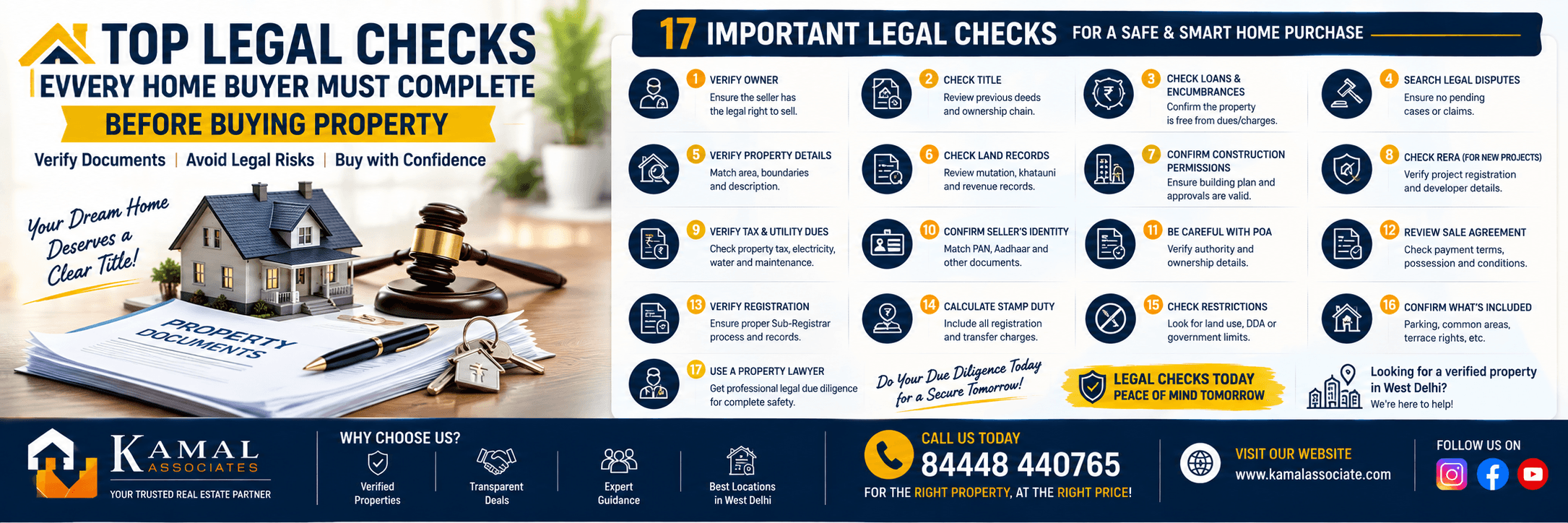
Top Legal Checks Every Home Buyer Must Complete Before Buying Property
Learn the essential legal checks before buying a home, including title verification, ownership, encumbrances, property documents, approvals and registration.

What Makes a Property a Smart Long-Term Investment?
Discover what makes a property a smart long-term investment, from location and connectivity to rental demand, resale value, documentation and affordability.

Why Verified Properties Always Sell Faster
Discover why verified properties can attract serious buyers faster. Learn how clear documents, ownership verification, fair pricing and transparency make property transactions easier.