10 Property Buying Mistakes That Can Cost You Lakhs
Avoid 10 common property buying mistakes that can cost you lakhs. Learn about legal verification, hidden costs, home loans, property inspection, and smart buying tips in Delhi.
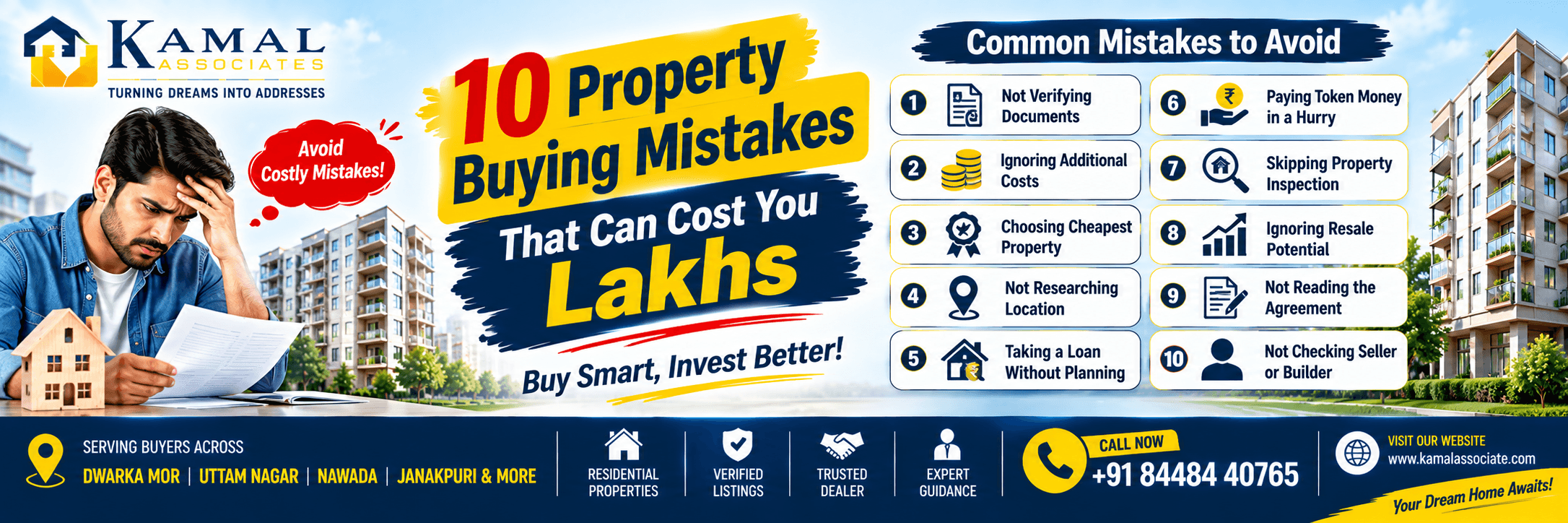
Buying a property is one of the biggest financial decisions in life. Whether you are planning to purchase a 2BHK flat in Dwarka Mor, a 3BHK builder floor in Uttam Nagar, or a residential property in Nawada or Janakpuri, choosing the right property requires more than comparing prices and visiting houses.
Many buyers make costly mistakes because they rush into a deal, trust verbal promises, ignore legal documents, or fail to calculate the complete purchase cost. Even a small mistake during property selection or documentation can create financial problems that may take years to resolve.
The good news is that most of these mistakes can be avoided with proper research, financial planning, and independent verification.
In this guide, Kamal Associates explains the 10 common property buying mistakes that can cost you lakhs and how to avoid them before purchasing your dream home in Delhi.
1. Not Verifying Property Documents Properly
One of the biggest mistakes buyers make is trusting the seller or broker without independently checking the property's legal documents.
A property may look perfect, but problems with ownership, previous transactions, mortgages, or building approvals can create serious complications after purchase.
What can go wrong?
The seller may not have clear ownership.
Previous ownership records may contain discrepancies.
The property may have an existing mortgage or legal dispute.
Construction may not comply with applicable approvals.
There may be outstanding dues or other liabilities.
How to avoid this mistake
Before paying a significant amount, ask a qualified property lawyer to verify the title documents, ownership history, seller's authority, applicable approvals, and relevant encumbrance records.
Delhi Police's Economic Offences Wing also advises buyers to check ownership history, building plans, applicable permissions, dues, and other relevant records before purchasing property.
Remember: Never rely only on verbal assurances or photocopies provided by the seller. <Link url="https://eow.delhipolice.gov.in/PressRelease/05.05.2023.pdf" title="Read Delhi Police property verification guidance"/>.
2. Ignoring Additional Costs Beyond the Property Price
Many buyers calculate their budget using only the advertised property price. They forget that purchasing a home involves several additional expenses.
For example, if you purchase a property worth ₹50 lakh, the final amount you need may be higher after applicable transaction charges, brokerage, loan expenses, and other costs.
Additional expenses may include:
Stamp duty and registration charges.
Brokerage, if applicable.
Home loan processing fees.
Legal verification charges.
Repairs and renovation.
Interior and furnishing expenses.
Maintenance and other applicable dues.
How to avoid this mistake
Prepare a complete purchase budget before finalising a property. Ask the seller or broker for a written breakdown of the charges and verify current government fees.
The Delhi Department of Revenue provides official information about property registration and applicable charges. <Link url="https://revenue.delhi.gov.in/revenue/important-information-regarding-registration-property" title="Check Delhi property registration information"/>.
3. Choosing the Cheapest Property Without Checking Its Quality
Finding a property at a lower price can feel like a great opportunity. However, the cheapest property is not always the best purchase.
A low-priced property may have poor construction quality, limited parking, inconvenient access, legal complications, or weak resale demand.
What should you check?
Construction quality and visible defects.
Water supply and drainage.
Road access and parking availability.
Ventilation and natural light.
Building maintenance.
Ownership and legal documents.
Nearby facilities and connectivity.
How to avoid this mistake
Compare at least three similar properties in the same locality. Consider their location, construction, amenities, size, and documentation.
A slightly more expensive property with better construction and clearer documentation may be a more sensible choice than a cheaper property with hidden problems.
4. Not Researching the Location Properly
Many buyers focus so much on the house that they forget to investigate the surrounding area.
Remember, you are not just buying four walls. You are also choosing the neighbourhood where you and your family may live for many years.
Why location matters
A property's convenience and future demand can be influenced by:
Metro connectivity and public transport.
Schools and colleges.
Hospitals and healthcare facilities.
Local markets and shopping areas.
Road conditions and traffic.
Employment and commercial centres.
Neighbourhood safety and maintenance.
How to avoid this mistake
Visit the locality during morning, afternoon, and evening hours. Check actual travel times and speak with nearby residents about water supply, electricity, parking, and other everyday issues.
For buyers considering Dwarka Mor, Nawada, Uttam Nagar, and Janakpuri, compare the actual street, facilities, and connectivity instead of judging a property only by its locality name.
5. Taking a Home Loan Without Understanding the EMI
A home loan can make purchasing a property easier, but taking a loan beyond your financial capacity can create long-term pressure.
Some buyers focus only on the loan amount and forget to calculate how the EMI will affect their monthly expenses.
What can go wrong?
Monthly savings may become too low.
Unexpected expenses may create repayment difficulties.
Interest rate changes may affect the EMI or loan tenure, depending on the loan terms.
Existing loans may increase the financial burden.
Buyers may struggle to manage household expenses.
How to avoid this mistake
Before accepting a loan, calculate your EMI and compare it with your monthly income and existing financial commitments.
Also consider:
Down payment requirements.
Interest rate and loan tenure.
Processing and other charges.
Prepayment conditions.
Emergency savings.
Choose a loan that allows you to manage your lifestyle and financial responsibilities comfortably.
6. Paying Token Money in a Hurry
Some buyers pay token money immediately after visiting a property because they fear another buyer will purchase it first.
This can become a costly mistake if the property's documents, ownership, or terms have not been checked.
What can go wrong?
The seller may not have clear ownership.
The property may have unresolved legal issues.
Refund conditions may be unclear.
Important terms may not be documented.
Disagreements may arise over the payment schedule.
How to avoid this mistake
Before paying token money:
Verify the seller's identity and authority.
Ask for the relevant property documents.
Agree on the token amount and payment terms.
Clearly document refund and cancellation conditions.
Obtain a signed receipt.
Use traceable payment methods.
Never transfer a substantial amount based only on a verbal promise or pressure from a seller.
7. Not Inspecting the Actual Property Properly
Beautiful photographs and attractive advertisements can make a property look perfect. But pictures cannot reveal every construction defect or maintenance problem.
A buyer who skips physical inspection may discover expensive repairs after taking possession.
What should you inspect?
Wall cracks and seepage.
Flooring and doors.
Electrical wiring and switches.
Plumbing and water pressure.
Bathroom fittings and drainage.
Ventilation and natural light.
Lift and common-area condition, where applicable.
Parking and building access.
How to avoid this mistake
Visit the actual property rather than depending only on photographs or sample flats. If possible, take a qualified civil or technical professional along to identify issues that may not be obvious.
For resale properties, also ask about the building's maintenance history and any planned repair expenses.
8. Ignoring the Property's Resale and Rental Potential
Some buyers choose a property only according to their immediate requirements. They do not consider whether it will be attractive to future buyers or tenants.
Even if you plan to live in the property, resale potential is worth considering because your circumstances may change.
What affects resale potential?
Location and connectivity.
Property layout and usable space.
Construction quality.
Parking availability.
Neighbourhood facilities.
Legal clarity.
Demand for similar properties.
How to avoid this mistake
Consider whether the property will appeal to a reasonable number of future buyers. Compare similar properties in the locality and research realistic rental values.
Do not assume that every property will appreciate or generate high rental income. Future returns depend on market conditions, purchase price, demand, and property quality.
9. Not Reading the Agreement Before Signing
Some buyers sign property agreements without carefully reading every clause. They assume that the seller or broker has included all the necessary details.
This can create problems if the written agreement does not match what was discussed verbally.
Important details to check
Correct names of buyer and seller.
Property address and identification details.
Agreed purchase price.
Payment schedule.
Possession date and conditions.
Refund and cancellation clauses.
Outstanding dues and responsibilities.
Included fixtures, fittings, or amenities.
Default and dispute-resolution provisions.
How to avoid this mistake
Read the entire agreement before signing. Ask for clarification about any confusing clause and consult a qualified lawyer where necessary.
Make sure all important promises are included in writing. Do not depend on verbal commitments that are missing from the agreement.
10. Not Checking the Seller, Builder, or Property Dealer Properly
Choosing the wrong person to deal with can make the entire buying process difficult.
Some buyers trust anyone who offers an attractive price or promises quick possession without checking their background or credentials.
Warning signs to watch for
Pressure to make immediate payments.
Refusal to provide relevant property documents.
Unclear ownership information.
Inconsistent details about the property.
Promises that cannot be verified.
Requests for payments into unrelated personal accounts.
How to avoid this mistake
Work with professionals who communicate clearly and provide relevant information. Verify the seller's identity and authority, request written payment records, and independently check the property documents.
A reliable property professional should help you understand the transaction rather than pressure you into making a quick decision.
Bonus: Property Buying Checklist Before You Pay
Use this checklist before finalising your dream home in Delhi.
VerificationWhat to checkOwnershipSeller's legal authority and title historyLegal statusRelevant disputes, mortgages, and encumbrancesConstructionApplicable approvals and physical conditionBudgetTotal cost, including additional expensesLoanEMI, interest rate, and eligibilityLocationMetro, roads, schools, and hospitalsInspectionPlumbing, electricals, seepage, and ventilationAgreementPayment terms, possession, and refund clausesPaymentsTraceable transactions and receiptsRegistrationApplicable stamp duty and registration process
The exact documents and checks depend on whether you are purchasing a builder floor, resale flat, apartment, or another type of property. Take independent legal advice before completing the transaction.
Conclusion: Avoid These Mistakes and Buy Property With Confidence
Buying a property should be an exciting milestone, not a source of financial stress. However, rushing into a deal, ignoring legal verification, underestimating expenses, or choosing a property only because it is cheap can cost you lakhs.
The smartest buyers do not simply look for attractive prices. They compare locations, inspect construction quality, understand their financial limits, verify ownership documents, and read agreements carefully.
Whether you are planning to purchase a 2BHK flat, a 3BHK builder floor, or a ready-to-move property in West Delhi, take the time to evaluate every important detail before making your decision.
Looking for a property in West Delhi?
Kamal Associates helps buyers explore residential property options in Dwarka Mor, Uttam Nagar, Nawada, Janakpuri, and nearby locations according to their budget and requirements.
Visit our website: https://www.kamalassociate.com/
Call Now: +91 84484 40765
Disclaimer: This article is for general informational purposes only and does not constitute legal, financial, or investment advice. Property documentation and applicable charges vary by transaction. Consult qualified professionals and verify current requirements before purchasing a property.
Frequently Asked Questions (FAQs)
1. What is the biggest mistake when buying property?
One of the biggest mistakes is not verifying the property's ownership and legal documents before making a payment. Buyers should also calculate the complete purchase cost and inspect the actual property.
2. What documents should I check before buying a property in Delhi?
Depending on the property, check the title deed, ownership history, seller's authority, applicable building approvals, mortgage or encumbrance information, and relevant outstanding dues. Consult a property lawyer for a complete review.
3. How much extra money should I keep when buying a flat?
Keep a separate budget for applicable stamp duty, registration, brokerage, legal fees, loan charges, repairs, and furnishing. The exact amount depends on the property's value and transaction details.
4. Should I pay token money before legal verification?
Avoid paying a substantial token amount before checking the seller's authority, relevant documents, and payment terms. Clearly document refund and cancellation conditions before making any payment.
5. Is a ready-to-move property safer than an under-construction property?
Ready-to-move properties allow buyers to inspect the completed structure, but they still require legal and technical verification. Under-construction properties require additional checks, including applicable RERA registration, approvals, builder background, and possession terms.
6. How can I avoid overpaying for a property in Delhi?
Compare similar properties in the same locality, check their condition and specifications, research reliable transaction information where available, and negotiate based on actual market evidence rather than advertised prices.
Related Articles

How to Identify a High-Growth Property Before Everyone Else
Learn how to identify high-growth properties before investing. Discover key factors like infrastructure, metro connectivity, rental demand, pricing, and property appreciation in West Delhi.

The Biggest Myths About Buying Property in Delhi
Discover the biggest myths about buying property in Delhi. Learn about hidden costs, legal verification, home loans, property prices, and smart buying tips for West Delhi.

Why Some Properties Appreciate Faster Than Others
Discover why some properties appreciate faster than others. Learn how location, metro connectivity, infrastructure, rental demand, and legal verification affect property value in West Delhi.